First looking at weather patterns, it appears that if there is nuclear fallout, where could you want to be? Remember weather patterns start in the West or North West and move across the country and change throughout the year, but always for the most part blow from East to West. So if you live East of the West Coast you could be in trouble if a Western city gets nuked. Then there are the East Winds in CA, which are called the Santa Ana Winds which are hot, fast moving and dry, the worst possible conditions for fires. As we see every few years in the Southern CA mountains.
So then perhaps you might wish to live on the West Coast, fairly good weather all year and the wind blows the other way. But you would want to live far from any major city on the West Coast. Not in LA, Not near the Nuclear Power plants, Not near the Military bases of Pt Mugu, Camp Pendleton or Vandenburg AFB. So where? Probably on the coast between Humbolt, CA and mid state OR. But alas there are huge faults along the West Coast and the OR Coastline is riddled with issues from liquefaction to offshore Tsunami generating Earthquake faults.
San Francisco gets huge Earthquakes as we know and LA is not immune either and neither is the central valley of CA with it's issues after proof in the Coalinga Fault. Living between the Russian River and OR Coastline near the coast would be okay even with these issues. Also you would not be down wind from any fallout and you are not a target. Safe in that you have fish for food and lumber for heat and no need for much of anything like power, surrounded by capable woods people.
You would have lots of rain and no water that would be polluted running off from areas of fallout. Of course from an attack by sea from the Pacific side in the case of invasion, you would not be in the best spot, we are not expecting any wars, yet 20 years from now will China be our biggest trading partner or will 2 billion of them like this piece of real estate? If we were attacked for some reason you would have air support from all the Navy and Air guard Bases along the Pacific Coast. Where are other good spots? If Seattle was not hit by a weapon of mass destruction then you still have Earthquakes and remember MT. Saint Helen. There are some cities inland on the I-5 freeway surrounded by mountains, but they are close to volcanoes too?
Where else would be good? Well not Phoenix, not Las Vegas and Reno is over the hill from CA and gets all it's left over weather. Boise has issues too. Although there are other cities in ID worthy of mention. Salt Lake is on a huge Earthquake fault. How about Helena MT, drought plagued and fire issues. Kellogg ID, superfund area. Billings out of water, Bozeman? Well too close to the State Park and there are issues with the volcanoes there too. Butte, MT also too close. Casper WY out of water and down wind in case of Volcanic Activity from Yellow Stone. Also think if Portland, SF or LA are not hit with nukes then we like, Four Corners, Elko NV, Battle MT (armpit) are doable with large underground water supply but it has arsenic in it. Winnamucka NV many not be safe either, but has thermal activity for power. ND and SD seem safe too, but winter weather is tough. Ogalla underground aquifer is being drained fast and could cause Earthquake from collapse. Western NE, not good, Denver either in case of water supply issues in future or fallout from volcano in Yellow Stone. How about in the Northern Section of AZ? Flagstaff has harsh weather, fire season. Winslow AZ is okay, with rail and FWY, but isolated. Of course these are only a few western states really and well we have identified several great locations with everything you need to survive.
Having studied the FEMA reports and the regional issues of each area and state and the disaster plans, we are well served by such data, but it falls short and a comprehensive plan of attack needs to be considered, because many people living in a region will need supplies, such as we see after major Hurricanes. Which by the way leaves us to wonder if there are in fact any safe cities on the entire Eastern Seaboard, Gulf Coast or West FL coastlines. As we saw in the black out of 2003, the Hurricanes and loss of power, the many fires in drought areas of CA, AZ, NV, MT, ID, OR, NM these are all big issues.
When multiple disasters hit, and transportation is down, power is out, water turned off, dams broken, bridges out, etc. Then what? Well, for some it will be their demise, others have adequately planned. Some of the safest cities are sitting near large underground water supplies and generate their own power or have co-generation plants, which are co-ops near by. Those mid western cities near large rivers are not safe due to the issues with flooding, as we have seen and continue to see every three to five years some town gets it. The water is fresh and clean in those areas and very soft, but when it floods, it is a disaster and very dangerous too.
Some would say it is probably unnecessary to have a major disaster plan, however it is a good exercise anyway, in planning. Things of importance are fresh water supply uncontaminated, food supply, encapsulated market, not over populated, no problems with contaminated air from normal weather patterns know and comparable to the last 200 years, out side of a fire zone and a defendable location. Also of secondary importance out side the risk of major seismic activity, travel from major highways causing and influx of others trying to get away thus bringing in diseases or viruses or using up local natural resources. Worst places to be D.C., state capital cities with lots of military bases close by, cities on major freeways with bridges and no other ways around for over 40 miles or passes on mountain ranges.
The cities which do not make the safest cities are Denver, Dallas, Mobile, Biloxi, Seattle, Chicago, NYC, Orlando, Tampa, Las Vegas, Salt Lake, LA, etc. Cities with no way to get out the population quickly are of problem, for instance DC with it's daily grid lock or Los Angeles, Atlanta, SF, etc. Cities, which rely on outside sources to get in important stuff are bad. Not to mention you are more likely to die from an auto wreck, although on the plus side they have the cleanest and best filtrated water supplies. That of course a trade off from the polluted air around you which could also kill you before your average life expectancy figure.
Port cities and cities with big major airports, which are hubs for major airlines are bad too. Cities that are big but do not have fed banks are one click down on the list too. Think of the logistics by train too. Cities which are down river close to major railroad bridges, which handle lots of interstate trains are bad too. Port cities get an extra bad deal. Cities which are close to port cities which are over 2 million population are dangerous too. Large cities near borders of Mexico are dangerous if they have over 2 million populations.
San Diego County, San Antonio, Phoenix, Austin TX, Houston, even throw in Tucson, El Paso, Yuma all bad. Already at a fresh water problem time due to droughts and over populations. Santa Monica is bad and LAX is a bad area to be near. A problem at the sewer treatment plant near LAX could be devastating with chlorine gas and weather patterns, with a weapon of mass destruction. Worrisome also to our scenario of possibilities is the major computer brain areas. Like Silicon Valley, Seattle, VA and other Internet hubs, which would also include Boston.
I would like to see a comprehensive plan to save American lives if an attack or Mother Nature event occurs, one which encompasses the entire country. Perhaps this is a good job for our war planners at the Pentagon, to try a reverse order plan, it would help them learn where best to minimize vulnerabilities and an action plan against International Terrorists or Catastrophic Mother Nature Events.
I have been to every city in the United States over 10,000 population. Where have you lived? Have you lived thru a natural disaster? Many of us have. The Hurricanes alone last year alone added 40 more million people to that list, it was a costly year for FEMA, but we made it through and showed resilience. So where are you safe? The answer might be nowhere or everywhere and preparation and quality of first reponders may hold that key. What were your concerns, and immediate needs during that period in your life when you faced such uncertainty? What would you tell others who plan to protect the property and lives of America, too the first responders, planners and those entrusted to protect humanity in the times of need?
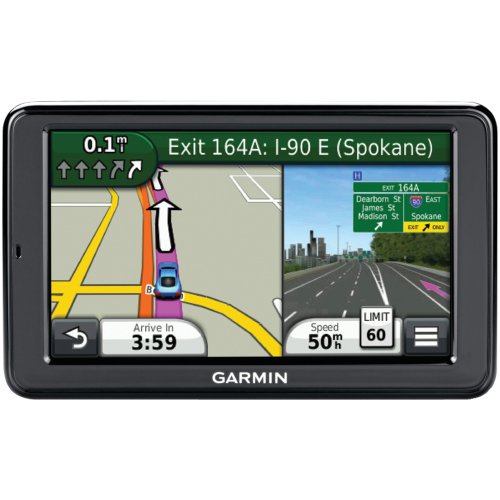

 | Price : $219.99 | Post Date : Feb 16, 2012 14:04:32
 display and powerful navigation features. It includes FREE lifetime traffic¹ and map² updates, advanced lane guidance and more.
 check traffic conditions more than 2 billion times each month, so you can easily reroute around congestion and arrive on time.
 hospitals, police stations and more. And Enhanced Exit Services tells you what services you’re approaching on the highway.


